
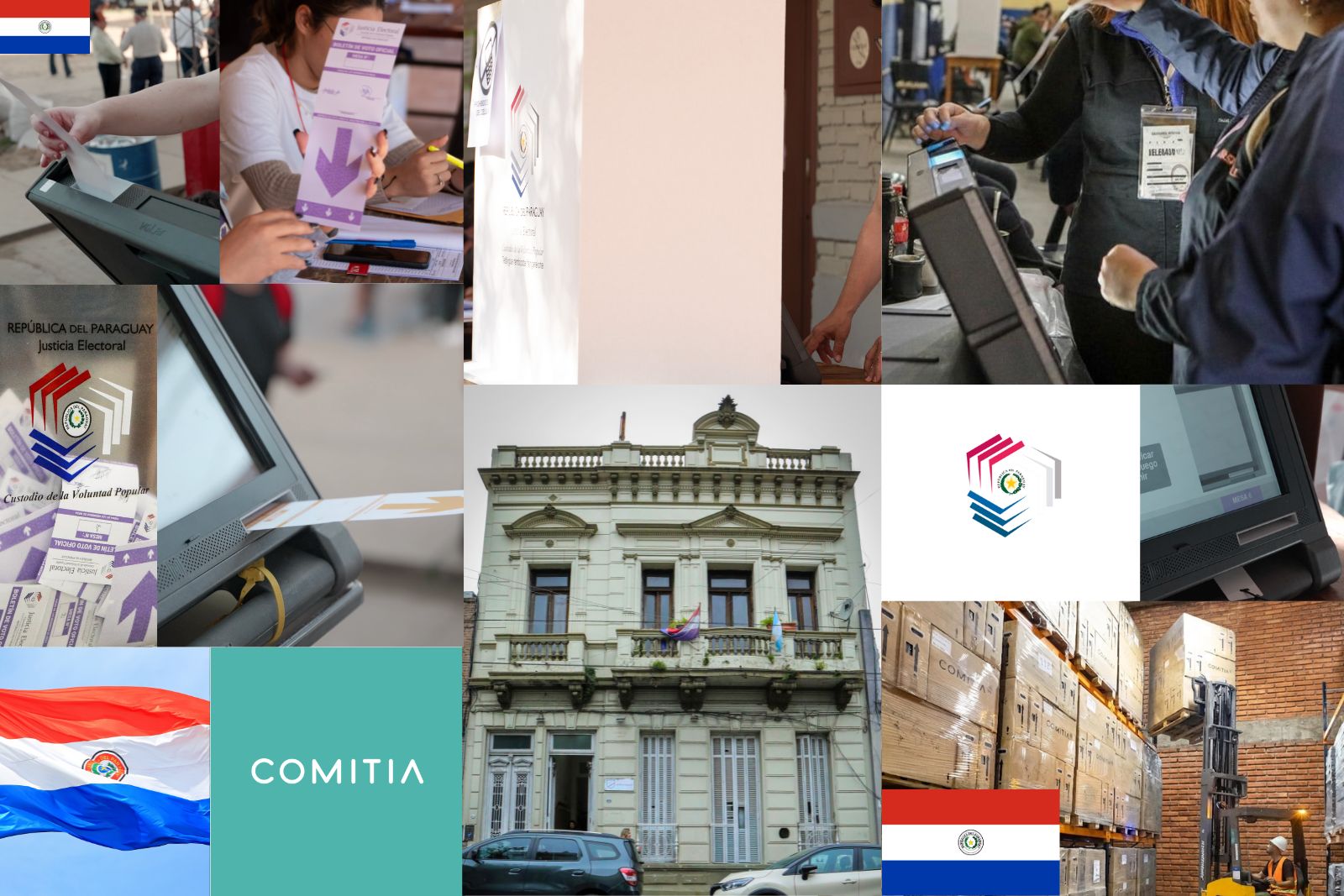
COMITIA MSA has maintained uninterrupted participation in Paraguay's internal and municipal elections since 2021. As the manufacturer of the voting machines and developer of the electoral software used throughout the process, the company is responsible for providing the technological infrastructure, software solutions, ballots and election materials, training, technical support, and equipment maintenance required for the elections.
The Technical Scope of the Project
In accordance with the requirements established in the bidding specifications issued by Paraguay's Superior Tribunal of Electoral Justice (TSJE), the project includes the provision, preparation, and deployment of more than 18,000 electronic voting machines.
The company also produced and supplied 7.1 million ballots and electoral documents, including voting ballots, results certificates, tally sheets, transmission certificates, 52,000 credentials, and training materials.
In addition, Comitia is responsible for developing the software used by voters to select candidates, as well as the functionalities required for vote counting and tabulation.
It also provides the operational materials necessary for the election, including 7,200 privacy screens and 24,000 USB flash drives. Particular emphasis has been placed on accessibility, with materials designed to facilitate assisted voting and ensure full participation for voters with disabilities, including 3,500 headphones and accessibility acrylic templates.
At the same time, COMITIA participates in the technological integration of the Preliminary Electoral Results Transmission system (TREP), for which it supplies 1,500 antennas. The electoral documents incorporate RFID technology to strengthen identification and control mechanisms.
The contract also includes participation in rigorous national and international audits of hardware and information systems conducted by governmental bodies and independent organizations. In addition, it covers technical demonstrations and training sessions for TSJE officials and technical support personnel.
Centralized Operations and Nationwide Deployment
The execution of the project required the importation and delivery of more than 18,000 voting machines to a dedicated 4,000-square-meter facility specifically equipped for equipment preparation and configuration.
At this operations center, more than 75 professionals engaged by COMITIA carried out functional testing, component verification, battery charging, and installation and configuration of the official election software on every voting terminal.
The equipment supplied to the TSJE, the institution responsible for administering Paraguay's electoral process, was subsequently deployed to 1,267 polling locations throughout the country.
Supporting Overseas Voters
A portion of the voting machines supplied by COMITIA was specially prepared for international deployment by the TSJE through dedicated logistics protocols and diplomatic pouch procedures. As a result, voting terminals were made available in the United States (New York and New Jersey), Spain (Madrid, Barcelona, and Málaga), and Argentina (Buenos Aires and five additional locations), allowing Paraguayan citizens residing abroad to participate in the electoral process.
A Dual Electoral Challenge
This technological infrastructure will support two separate electoral events during 2026. First, the voting machines were used in the Simultaneous Internal Elections held on June 7, in which 32 political parties, 22 political movements, and 214 alliances selected their candidates for 263 mayoral offices and 2,832 city council seats. During the same election day, several political organizations also elected their internal authorities. In total, 4,657,214 voters were eligible to cast their ballots.
The same infrastructure will subsequently be used in the Municipal Elections scheduled for October 4. For this election, COMITIA will deploy a new version of its software adapted to the electoral offerings resulting from the internal elections. During these elections, local authorities will be elected across municipalities throughout the country.
The Technical Scope of the Project
In accordance with the requirements established in the bidding specifications issued by Paraguay's Superior Tribunal of Electoral Justice (TSJE), the project includes the provision, preparation, and deployment of more than 18,000 electronic voting machines.
The company also produced and supplied 7.1 million ballots and electoral documents, including voting ballots, results certificates, tally sheets, transmission certificates, 52,000 credentials, and training materials.
In addition, Comitia is responsible for developing the software used by voters to select candidates, as well as the functionalities required for vote counting and tabulation.
It also provides the operational materials necessary for the election, including 7,200 privacy screens and 24,000 USB flash drives. Particular emphasis has been placed on accessibility, with materials designed to facilitate assisted voting and ensure full participation for voters with disabilities, including 3,500 headphones and accessibility acrylic templates.
At the same time, COMITIA participates in the technological integration of the Preliminary Electoral Results Transmission system (TREP), for which it supplies 1,500 antennas. The electoral documents incorporate RFID technology to strengthen identification and control mechanisms.
The contract also includes participation in rigorous national and international audits of hardware and information systems conducted by governmental bodies and independent organizations. In addition, it covers technical demonstrations and training sessions for TSJE officials and technical support personnel.
Centralized Operations and Nationwide Deployment
The execution of the project required the importation and delivery of more than 18,000 voting machines to a dedicated 4,000-square-meter facility specifically equipped for equipment preparation and configuration.
At this operations center, more than 75 professionals engaged by COMITIA carried out functional testing, component verification, battery charging, and installation and configuration of the official election software on every voting terminal.
The equipment supplied to the TSJE, the institution responsible for administering Paraguay's electoral process, was subsequently deployed to 1,267 polling locations throughout the country.
Supporting Overseas Voters
A portion of the voting machines supplied by COMITIA was specially prepared for international deployment by the TSJE through dedicated logistics protocols and diplomatic pouch procedures. As a result, voting terminals were made available in the United States (New York and New Jersey), Spain (Madrid, Barcelona, and Málaga), and Argentina (Buenos Aires and five additional locations), allowing Paraguayan citizens residing abroad to participate in the electoral process.
A Dual Electoral Challenge
This technological infrastructure will support two separate electoral events during 2026. First, the voting machines were used in the Simultaneous Internal Elections held on June 7, in which 32 political parties, 22 political movements, and 214 alliances selected their candidates for 263 mayoral offices and 2,832 city council seats. During the same election day, several political organizations also elected their internal authorities. In total, 4,657,214 voters were eligible to cast their ballots.
The same infrastructure will subsequently be used in the Municipal Elections scheduled for October 4. For this election, COMITIA will deploy a new version of its software adapted to the electoral offerings resulting from the internal elections. During these elections, local authorities will be elected across municipalities throughout the country.