
This article explains what the electoral roll is, how it works in practice, what limitations the traditional model presents and why digitizing its management at the polling station has become a priority for electoral authorities seeking to modernize their operations.
What is the electoral roll
The electoral roll is a public, up-to-date record of all persons entitled to vote in a given jurisdiction.
It serves three essential functions within the electoral process.
The first is to identify and verify eligible citizens. Every person who shows up to vote must appear on the roll in order to cast a ballot.
The second is to organize the voting process, assigning each voter a station and a polling place.
The third is to guarantee the uniqueness of the vote, ensuring that no person can vote more than once.
An accurate roll and efficient management at the station are basic conditions for the legitimacy of any election.
When the roll contains errors or its management during the day is slow, the consequences range from excessive lines to challenges questioning the validity of the process.
How the electoral roll works in the traditional model
In most traditional systems, the roll is printed on paper and distributed to each polling station before election day. The process at the station follows a manual sequence that has remained practically unchanged for decades.
The polling station authority receives the voter, looks up their name on the printed list, verifies their identity by comparing the document with the roll data, manually records their participation by signature or fingerprint, and issues a voting receipt, also manually.
This process works, but it has limitations that become evident in high-turnout contexts or in elections with many stations and categories.
Check-in times
Manually searching for a voter on a printed list can take several minutes, especially when many voters are assigned to the same station or when names have similar spellings. Multiplied by hundreds of voters, this time translates into lines that discourage participation.
Registration errors
Manual recording of participation is error-prone: a wrongly crossed-out name, a signature on the wrong line or an illegible receipt.
These errors complicate subsequent audits and can generate discrepancies between the number of registered voters and the number of ballots in the box.
Lack of real-time information
With the paper model, the central electoral authority has no way of knowing turnout in real time during the day.
Turnout data is only consolidated after closing, which limits the ability to respond to operational incidents.
Manual generation of documents and receipts
The documentation produced at the station, such as voting receipts and opening and closing records, is completed by hand. This creates variations in legibility and format, and increases the workload of polling station authorities on an already long day.
Why digitizing roll management matters
It is important to clarify that digitizing roll management at the polling station does not mean replacing the official roll or modifying the records of eligible voters.
What is digitized is the use and control of the roll during the day: how the voter is looked up, how their identity is verified, how their participation is recorded and how station documentation is generated.
This distinction is relevant because it allows electoral authorities to modernize election day operations without altering the official roll database or the legal processes for registering and updating voters.
Faster check-in
Reading the identity document with an electronic device and instantly searching the digital roll reduce check-in time to seconds.
This shortens lines, improves the voter experience and allows the polling station authority to serve more voters in less time.
Greater recording accuracy
Electronic recording of participation eliminates the ambiguities of manual registration. There is no risk of marking the wrong name, generating an illegible receipt or registering the same voter twice. The information is stored in a structured, consistent way.
Operational control of the day
Digitization allows the central electoral authority to have a consolidated view of turnout during the day, without affecting station operations.
This facilitates early detection of problems, such as stations with unusually low or high turnout, and enables operational decisions based on real-time data.
Automatic document generation
Voting receipts, opening and closing records and other station documents are generated electronically in a standardized format. This reduces the workload of the polling station authority and ensures the legibility and consistency of documentation for subsequent audits.
Turnout statistics
A digital roll management system can generate turnout reports by station, by district and by jurisdiction, both during the day and at closing. This data is valuable for post-process analysis and for planning future elections.
Security and privacy in roll digitization
The electoral roll contains citizens' personal data. Digitizing it on devices that operate at the polling station demands security and privacy standards that protect that information against unauthorized access, tampering or leaks.
Secure boot
Devices must boot from a secure medium that guarantees the integrity of the software being run. This ensures that the system operating at the station is exactly the one that was audited and approved, without modifications.
Data encryption
Roll data stored on the devices must be encrypted, both at rest and in transit. This protects voters' personal information even if the device is lost or stolen.
Profiles and roles
Access to the system's information and functionality must be limited through user profiles with specific permissions. The polling station authority, the supervisor and the support technician do not need to access the same data or perform the same operations.
Event auditing
Every action performed in the system must be recorded in immutable logs that allow the sequence of events to be reconstructed in case of an audit. These records facilitate accountability without compromising voter privacy.
Notebox: COMITIA's solution for digital roll management
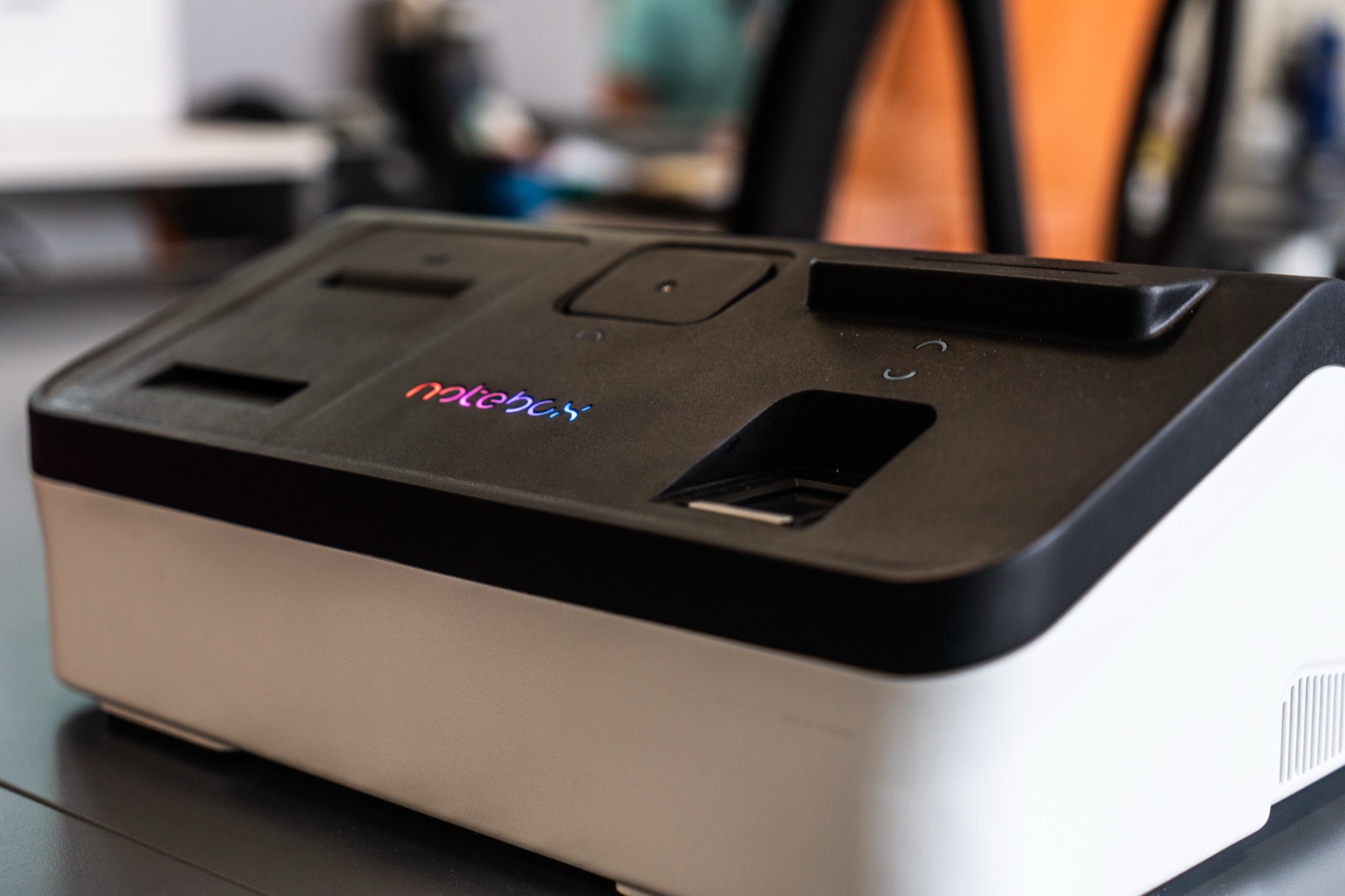
Notebox is COMITIA's platform designed to modernize polling station management, covering each of the aspects described in this article.
Its functionality includes reading the identity document for fast voter identification, instant verification in the electronic roll, digital recording of participation that ensures the uniqueness of the vote, electronic generation of receipts and station records, and a statistics module for real-time turnout monitoring.
Notebox can be implemented both in elections using the Electronic Single Ballot (BUE) and in elections with manual voting.
This means an electoral authority can modernize its roll management and station operations without changing the voting method, which significantly reduces the complexity of the transition.
The solution operates within the framework of COMITIA's ISO/IEC 27001 and ISO/IEC 27701 certifications, issued by TÜV Rheinland, which attests that its data security and privacy management processes meet independently verified international standards.
Notebox's interface for polling station authorities follows a guided approach, with live validations and messages in clear, non-technical operational language, making it easy to use for any operator without advanced training. It also includes technical accessibility labels on critical components, such as the alphanumeric keypad, which make it easier to use with screen readers.
Digitizing the electoral roll at the polling station is one of the first steps an electoral authority can take toward modernizing its processes.
Its impact is immediate on the voter experience and the operational efficiency of the day, and it lays the groundwork for incorporating technology in later stages of the electoral cycle.