
This article explains in detail what the Electronic Single Ballot is, what its components are, how the process works step by step and why it has established itself as one of the reference solutions for electoral authorities seeking to modernize their elections without sacrificing transparency.
What is the Electronic Single Ballot (BUE)
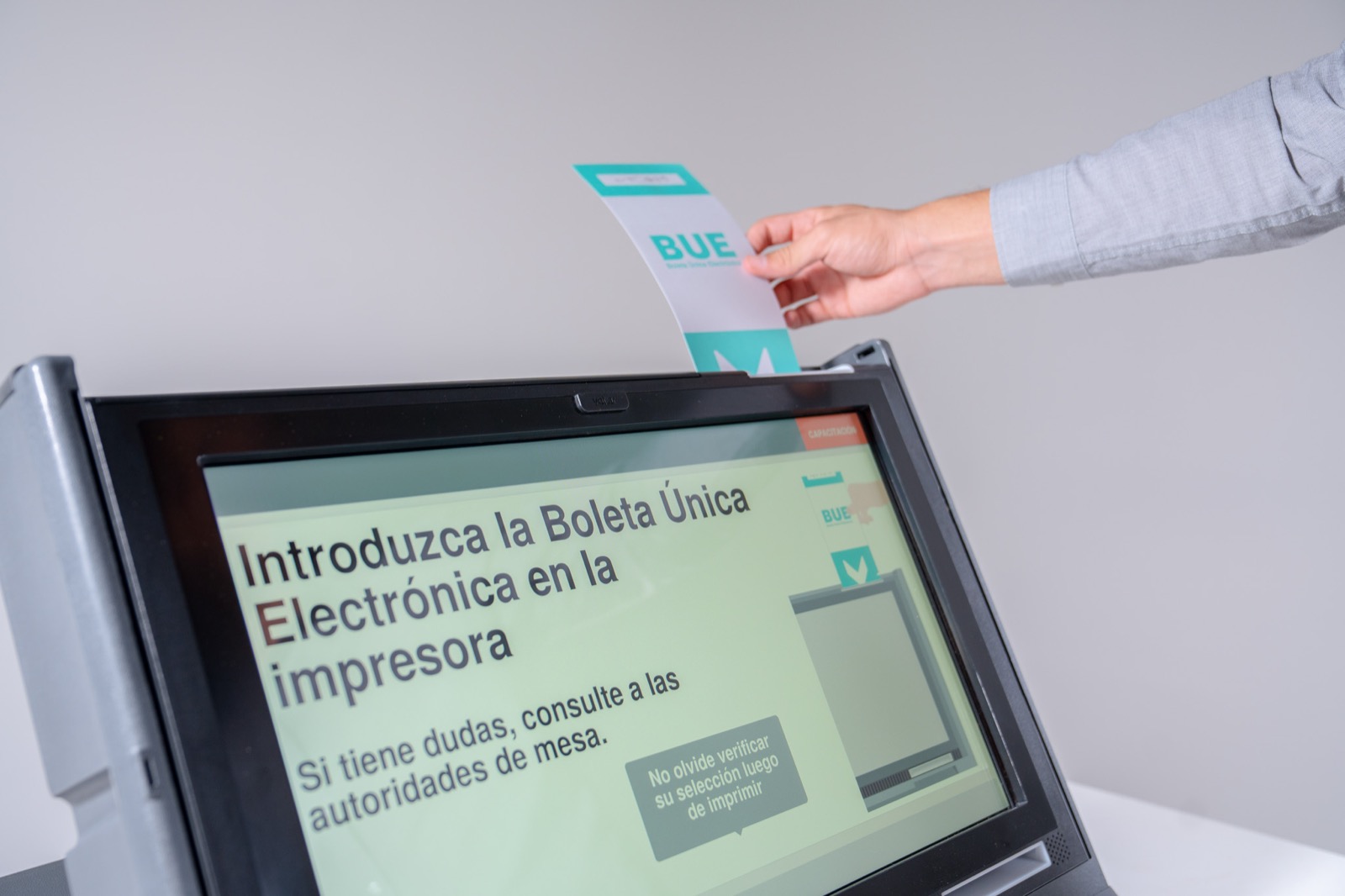
In the BUE system, the voter selects their candidates on an electronic terminal with a touchscreen.
However, the vote is not stored in the machine. The terminal performs two simultaneous functions: it prints the vote on a paper ballot in legible text and digitally records the same information on an RFID chip embedded in that same ballot. The terminal has no permanent storage device: it keeps no record of the vote once cast, since all the information is held solely on the ballot.
Once the selection is complete, the voter removes the ballot, verifies that what is printed matches their intent, and places it in a traditional ballot box. The terminal is ready for the next voter without retaining any data from the previous ballot.
This design resolves one of the most frequent debates around electronic voting: the tension between digital efficiency and citizen trust.
By maintaining a physical record verifiable by the voter, the BUE allows technology to speed up and organize the process without citizens having to place their trust exclusively in a computer system.
Components of the BUE system
The operation of the Electronic Single Ballot is based on the interaction of four elements.
Voting terminal
It is the electronic device with a touchscreen where the voter selects their candidates. It is designed to be intuitive and guide the voter at every step, regardless of their familiarity with technology.
The terminal has no network connection during voting hours, which minimizes external vulnerabilities.
Electronic Single Ballot
It is a special paper ballot containing an integrated RFID chip. The voter's selection is printed on it in legible text, and the chip digitally stores the same information.
This dual record is what enables cross-audits between paper and digital data.
Verification reader
It can be integrated into the terminal or work as a standalone device. Its function is to allow the voter to confirm that the information recorded on the chip matches exactly what is printed on the ballot. This verification takes place before the voter deposits their ballot in the box.
Traditional ballot box
The same type of ballot box used in manual elections. The voter folds their ballot to preserve ballot secrecy and deposits it just as they would in any conventional election.
This continuity with the traditional process makes adoption easier for voters.
How the Electronic Single Ballot works step by step
The BUE voting process is designed so that each stage is transparent and verifiable.
Voter check-in
The voter arrives at the polling station and the authority verifies their identity against the roll. In jurisdictions that use Notebox, this verification is done digitally by reading the identity document, reducing waiting times and registration errors.
Handing over the blank ballot
Once checked in, the voter receives a blank BUE ballot with its RFID chip. At this point, the ballot contains no information.
Selection at the terminal
The voter enters the voting booth, inserts the ballot into the terminal and selects their candidates on the touchscreen. Depending on each jurisdiction's regulations, they can choose a full ticket, split their ballot or cast a blank vote.
The interface displays the options in an orderly manner and allows the selection to be reviewed before confirming.
Printing and recording
Once the voter confirms their selection, the terminal prints the chosen options on the ballot in legible text and records the same information on the RFID chip. This process takes a few seconds.
Verification
The voter removes the ballot and can hold it up to the verification reader. This device confirms that the digital information on the chip matches what is printed on paper.
If the voter detects any discrepancy or simply wishes to change their vote, they can void that ballot and repeat the process with a new one, according to each jurisdiction's regulations.
Depositing in the ballot box
After verifying their ballot, the voter folds it to preserve ballot secrecy and deposits it in the traditional ballot box, exactly as in a manual election.
Counting
At the end of election day, the ballots are removed from the box. The RFID chip allows each ballot to be read quickly by the voting terminals or counting devices, which significantly speeds up the count.
At the same time, a manual recount ballot by ballot is always possible, since the printed text is the source of truth in case of any dispute. The chip is locked once the vote is cast, preventing later modifications.
Security and auditability of the BUE
The Electronic Single Ballot incorporates security mechanisms designed to guarantee ballot secrecy, the integrity of results and the impossibility of linking a ballot to the voter's identity.
Dual backup
Each vote is recorded on two independent media: the printed paper and the digital chip.
This duality enables cross-audits comparing both records to verify the consistency of the results. In case of discrepancy, the paper prevails as the source of truth.
The voter as first auditor
The design of the BUE gives voters direct auditability over their own vote, with no technical knowledge required: they can visually check what is printed on paper and digitally check what is recorded on the chip before placing their ballot in the box.
Public audits
The BUE software is auditable by political parties, independent experts and oversight bodies.
Audit processes can take place before the election (software and hardware review), during election day (polling station oversight) and after closing (recounts and cross-checks).
Secure boot
The BUE system boots from removable media under integrity controls. This ensures that the software running on each terminal is exactly the one that was audited and approved, without alterations.
Isolated operation
BUE terminals operate without network connections during voting hours. This design decision eliminates an entire category of attack vectors and reinforces confidence that the system operates autonomously at each polling station.
Advantages of the BUE for electoral authorities
For electoral authorities considering modernizing their processes, the BUE offers concrete operational benefits.
Reduction of invalid votes
The terminal validates the selection before printing, eliminating incorrectly marked or incomplete ballots. This directly reduces the number of invalid votes and post-election litigation.
Elimination of logistical problems with party ballots
The BUE replaces the logistics of pre-printed party ballots with a single blank electronic ballot.
This eliminates the risks of ballot theft or shortage, reduces mass printing costs and avoids the conflicts associated with restocking ballots in the voting room.
Faster counting
Electronic reading of ballots delivers preliminary results faster than manual counting, while maintaining complete traceability of the process.
Counting times at the polling station are significantly reduced, and integration with solutions such as Turing enables secure transmission of results from the polling place itself.
Regulatory adaptability
The slate of candidates can be updated quickly on the terminals without reprinting millions of ballots. The same system can be used for general elections, primaries, referendums and other participatory processes, adapting to the regulatory requirements of each jurisdiction.
Accessibility
The touch interface allows the design of accessible voting modes for people with disabilities, guaranteeing independent and secret voting for all citizens. This is a growing requirement in the legal frameworks of multiple countries.
The BUE in context: experience in real elections
The Electronic Single Ballot has been implemented in highly complex electoral processes.
Paraguay used the BUE system developed by COMITIA in its 2023 presidential election, becoming the first country in the world to elect its president with an electronic ballot.
Tierra del Fuego, in Argentina, combined BUE with remote internet voting in 2025 to broaden participation in a provincial election.
The BUE is also used outside government, in elections held by a range of private organizations: professional associations such as the Colegio de Escribanos, clubs such as River Plate, trade unions and civil associations, among others. In these settings, direct verifiability by the voter is just as valuable as in a public election.
In these cases, the pattern of success was consistent: prior pilots, training of polling station authorities, clear communication to citizens and active participation of parties and oversight bodies in audits and drills.
The BUE demonstrates that it is possible to modernize the voting process while maintaining the familiarity of paper voting, direct verification by citizens and the audit standards that democratic processes demand.